
Welcome to your first week of Summer School: Second Semester! Today, we’re diving into brand architecture.
Brand architecture is how offerings — from programs and events to strategic relationships — are organized and presented.
When a nonprofit grows, either by expanding what they do or through partnerships, it’s critical to consider how new initiatives fit into the big picture. Clear brand architecture helps audiences understand what an organization does and find what they’re looking for, which builds trust.
We’ve developed a five-part brand architecture process for maximum clarity and impact:

1. Brand Architecture Approach
First, we look outside-in. We define the current overarching approach for presenting offerings and relationships, and determine if attention should be:
- Driven to the organizational brand only through a branded house approach (e.g., FedEx)
- Shared across the organizational brand and a limited number of sub-brands through a blended house approach (e.g., Amazon), or
- Distributed across a number of brands in the portfolio through a house of brands approach (e.g., Unilever)
While we often recommend a branded house because it is the most efficient and cost-effective to maintain over time, the best approach for your organization may differ. For example, if a nonprofit has a prominent advocacy program with distinctive audiences from the organizational brand, a blended house may be the path forward.
2. Organizing Principles
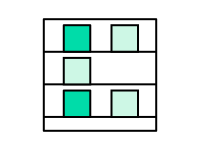
Next, we explore ways to ladder up all of the offerings in the portfolio into simple areas of focus or impact. How offerings are organized can depend on the organization type, for example:
- A professional services company may organize by sector or area of expertise (e.g., aerospace, healthcare, technology)
- An academic health system may organize around mission impact (e.g., research, care, education)
- A nonprofit may organize around focus areas (e.g., educational opportunity, economic mobility, community resiliency)
This framework for categorizing offerings should clearly convey what an organization does, the audiences it serves or the impact it creates. The organizing principles should support the brand strategy whenever possible.
3. Hierarchy of Information
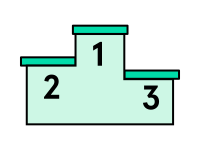
At this critical step, we define each layer in the portfolio. These can include entities, locations, programs, platforms, campaigns, events and more. It’s useful to take stock of the current state and consider if any layers are missing with questions like:
- Are there future plans for licensing or joint ventures?
- Do we think we may expand into different kinds of media?
- Is it clear which of our offerings are physical locations or not?
While these definitions may only be internal, external audiences will benefit from them. Once we have defined and grouped similar offerings, we can be much clearer about how they relate to one other and treat similar offerings in similar ways to enhance understanding and ease navigation.

4. Naming
After portfolio layers are defined, it’s time to name them. We create universal naming rules for referring to parts of the organization and guidelines for naming new offerings.
Think of your naming structure like building blocks. It needs to account for different facets of names — from physical locations to areas of focus — including the possibility of donor naming. Once your structure is in place, new names can be created without starting from scratch.
5. Visual Treatment
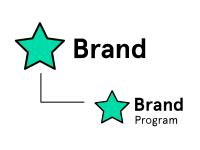
Finally, it’s time to consider how to visually express the layers in the portfolio. The signature system is how offerings and relationships are represented visually so that audiences can understand the full scope of what an organization does.
Your overarching brand architecture approach should guide visual treatments. For example, if you’re building a branded house, avoid pairing logo-like objects with individual offerings. Instead, reinforce the organizational logo with text-only treatments.
A robust visual system will offer graphic elements, illustrations and other assets that designers can use to bring your offerings to life — without creating a logo for every new initiative.
With this process in mind, you can arrive at a brand architecture approach that simplifies decision-making and strengthens your brand’s relevance, reach and recognition — driving engagement and impact.
Have questions about brand architecture? Let’s chat. Contact us here.