
Every day, people are bombarded with thousands of messages competing for their attention.
Great campaigns don’t simply add to the noise. They create moments that people remember and want to be part of.
That’s where campaign activation begins.
Whether building awareness, raising funds or rallying volunteers, a successful campaign starts with a strong strategy and framework, which guides brand expression.
Our three-step approach will help you get started:
1. Campaign Strategy
Every campaign enters a conversation. Before developing creative, understand the world around your organization and where you have permission to lead.
A campaign strategy considers:
- External Context: What matters most to your audiences right now? Explore the trends, audience needs and peers shaping the competitive landscape
- Internal Context: What can your organization authentically own? Consider your mission, strengths, reputation, history and the impact you’re aiming to make
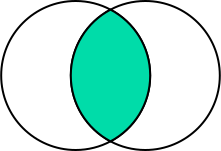
- Campaign Insight: Where audience needs intersect with your organization’s strengths, you’ll uncover the key insight that should guide every part of your campaign, from the theme to the story and the creative expression
This insight is your opportunity to connect with your audiences in a way that only your organization can. Use it throughout the campaign development process.
2. Campaign Framework
Once you’ve established the opportunity, it’s time to define the narrative framework for your campaign. This framework is the scaffold that guides key messages, storytelling and activation across audiences and touchpoints.
Three core components work together:
- Campaign Theme: The unifying idea that anchors the campaign and captures its core ambition, often expressed as a title, tagline or rallying cry
- Campaign Story: The context for why the campaign matters, articulating the need and the impact it will achieve for the organization, the community and the world
- Campaign Priorities: The focused areas where the campaign comes to life, translating ambition into clear opportunities for engagement and impact
Together, these elements help audiences see themselves in the larger story while understanding how they can become part of it.

3. Campaign Expression
With your framework in place, it’s time to bring your campaign to life through verbal and visual expression.
Verbal Expression
Words shape how audiences understand, remember and respond to your campaign. From headlines and key messages to stories, every word should reinforce your theme and inspire action.
Consider these best practices when writing:
- Support the framework: Let your theme, story and priorities guide every message — expressions should complement, not compete with the overarching campaign theme
- Aim for clarity and energy: Use plain language, simple syntax and active verbs to help audiences understand the ask and feel motivated to join in
- Adapt for different audiences: Create profiles for your core audiences, so you can tailor your messages to what motivates them most, while keeping the central story consistent
Visual Expression
Visual expression creates recognition before anyone reads a single word. Through imagery, color, typography and photography, it establishes mood, builds emotion and makes your campaign memorable.
Consider these best practices when designing:
- Flex within the brand identity: Ensure the campaign feels like part of your brand while standing on its own — use your visual elements in new ways to evoke emotion and create a unique, yet cohesive, experience
- Design for every touchpoint: Create a flexible and enduring visual language — your campaign should energize across print, digital and real-world applications without feeling stale over time, especially if it’s a multi-year effort
- Prioritize accessibility from the start: Combine strong color contrast, legible fonts, clear navigation and layouts to ensure the campaign is accessible to everyone and that every call to action is easy to understand
Break through and inspire
Every day, an endless stream of news, alerts and distractions steals attention. Purpose-driven campaigns need to break through this noise and inspire people to make a positive impact together.
With a strong strategy, a clear framework and compelling expression, your campaign can do more than capture attention. It can spark action and transform conversations, causes and communities for good.
Have questions about activating your next campaign? Contact us here.