Welcome back, Alex and Shelby!
Our Additive Agents have settled back in after ComNet26 in San Diego, the annual gathering of social sector leaders hosted by The Communications Network. They co-presented a poster about Additive’s partnership with YMCAs across the country to advance community well-being, titled, “Advancing an Audacious Vision for Community Well-Being.”
While there, they attended inspiring keynotes and presentations about the many ways nonprofits and foundations are using communications to create lasting change.
We sat down with them to hear what they learned.
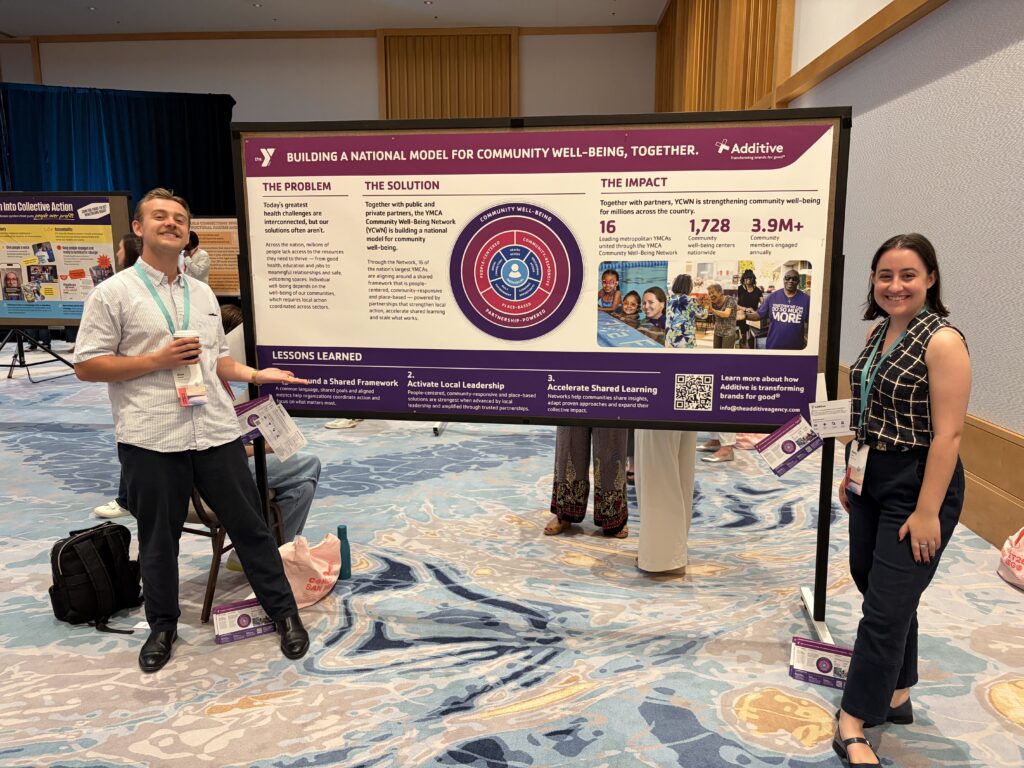
Additive Agents: Alex Withers and Shelby Rashap
What was the most thought-provoking session for you?
Alex: There were so many moments that made me think differently about my work as a strategist, but a presentation I attended on activating a change mindset has stuck with me.
Essentially, the thesis was: if you’re trying to encourage people to adopt a new behavior (that will ultimately serve their best interests), such as eating healthier food, you need to start with what’s driving their current behavior, rather than simply telling them what to do.
The presenter shared quitting smoking as a case study. The public already knows that smoking is bad for you. But quitting is hard, and that information alone isn’t enough to inspire people to stop. Instead, an organization in Hawaii reframed quitting around cost.
They ran a campaign about the extra expenses of a smoking habit, appealing to affordability rather than health. Reframing the motivation from “making healthy choices” to “saving money” helped people cut back on cigarettes more effectively.
Shelby: I went to a presentation about what we can learn from trauma-informed communication.
It highlighted how important it is to acknowledge that many of the people we’re trying to reach right now are experiencing different levels of stress and trauma, stemming from challenges from the cost-of-living crisis to natural disasters. As a result, their capacity for attention may be limited, making it harder to connect.
In times of uncertainty like this, a trauma-informed approach asks us to create predictability. Communicating at a regular cadence through consistent updates, newsletters, posts and more can establish stability that helps people feel informed, secure and better able to anticipate what’s coming next.
Giving people choices was another approach that stood out. We can counteract feelings of helplessness that traumatic experiences can evoke by presenting options for audiences to choose from. On a tactical level, that can look like offering two ways to get involved — donate or volunteer — or giving folks the agency to opt in or out of certain messages. This helps people feel more in control.
Did you notice any overarching communications trends?
Shelby: The major theme of the conference was around how to tell a story that moves people across any medium, be it a presentation or a social post.
A trend I saw related to that was the importance of broadening perspectives. Alex and I attended the keynote with Pulitzer Prize winner, Percival Everett, and he shared a helpful analogy.
If you were trying to understand the dimensions of your house, but you only stood in a single corner, you would never be able to see the full picture. You have to move around from room to room and floor to floor to gain a complete understanding.
As communicators working to create a better world, we need to collaborate across sectors and areas of expertise to align on shared action and reach as many people as possible. To do that well, we need to step out of our corner — seeking out different perspectives, making connections and establishing a clear, responsive point of view.
Building productive relationships and shared outcomes across teams is a big part of my role. This insight was a great reminder to continue asking questions and diving deep into clients’ realities throughout the creative process to ensure we’re designing impactful solutions to their challenges.
Alex: Not so much a trend, but an observation related to the idea of telling a moving story: make it simple enough to travel.
Walking around the conference, I was struck by the range of stories shared through the posters. A few weeks later, two or three still stand out to me because they were clear, easy to understand and punchy.
Even if a story is resonant and grounded in smart strategy, simplicity is what helps it stick, travel and ultimately make an impact.
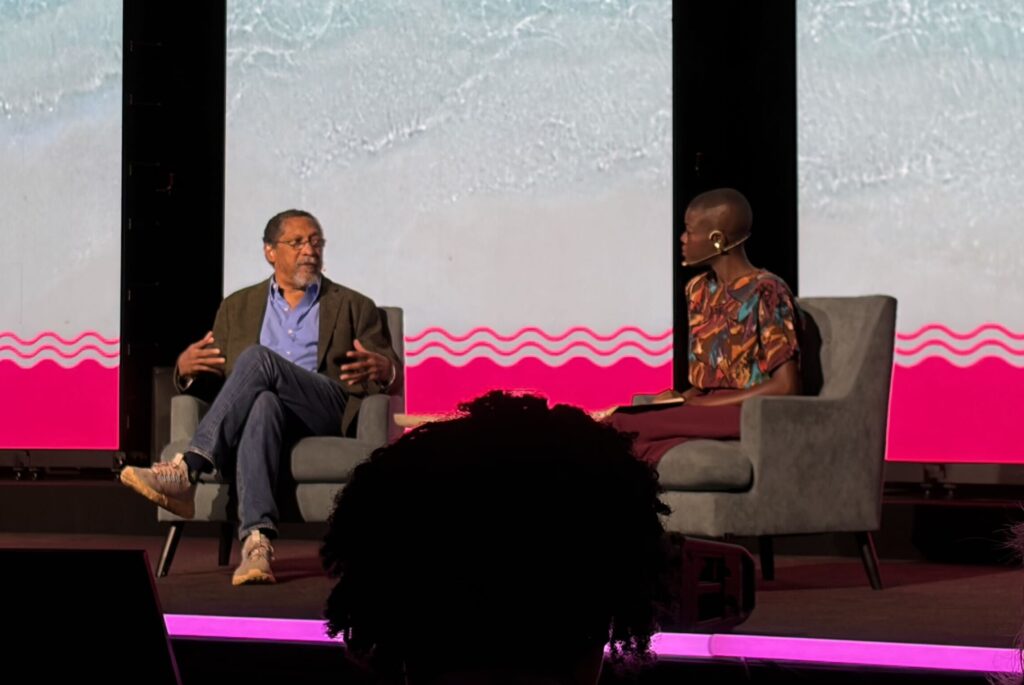
Keynote: Percival Everett, Pulitzer Prize-winning author
Conversation Partner: Nadege Green of Black Miami-Dade
What’s one insight you’re excited to apply to your work?
Alex: Getting closer to the people at the heart of our clients’ missions. Today, some communicators are creating strategies and content based on AI-generated audience personas. These overlook the unique beliefs, motivators and behaviors of the real people they are meant to represent, leading to a sea of sameness in branding.
I’m excited to continue deepening our understanding of who we are trying to reach so that we can create genuine and enduring connections grounded in lived experiences. The antidote to a world flooded with artificial stories is fiercely protecting the human ones.
Shelby: Percival Everett spoke about the power of making meaning together. I’m excited to bring our clients and communities into the act of co-creation, and in the process, help make a better world, together.