
A smart communications plan is essential to the success of any rollout.
Whether you’re looking to launch a capital campaign, announce a new program or implement a new service, you’ll need a communications plan to help you deliver the right message to the right audience to achieve optimal results and return on investment.
Developing a communications plan can seem like a daunting task, so we distilled the process down to six steps to help you get started.
1. Set Clear Goals and Objectives
A common pitfall for building a communications plan is jumping straight to the tactics. Goals and objectives are the roadmap of a plan and help you clarify the results you want to achieve with your tactics.
More specifically, goals are long-term in nature and can be viewed as the final destination on the roadmap. Generally, a plan will have up to three goals. Objectives are specific, measurable outcomes or results that an organization plans to achieve in a given period.
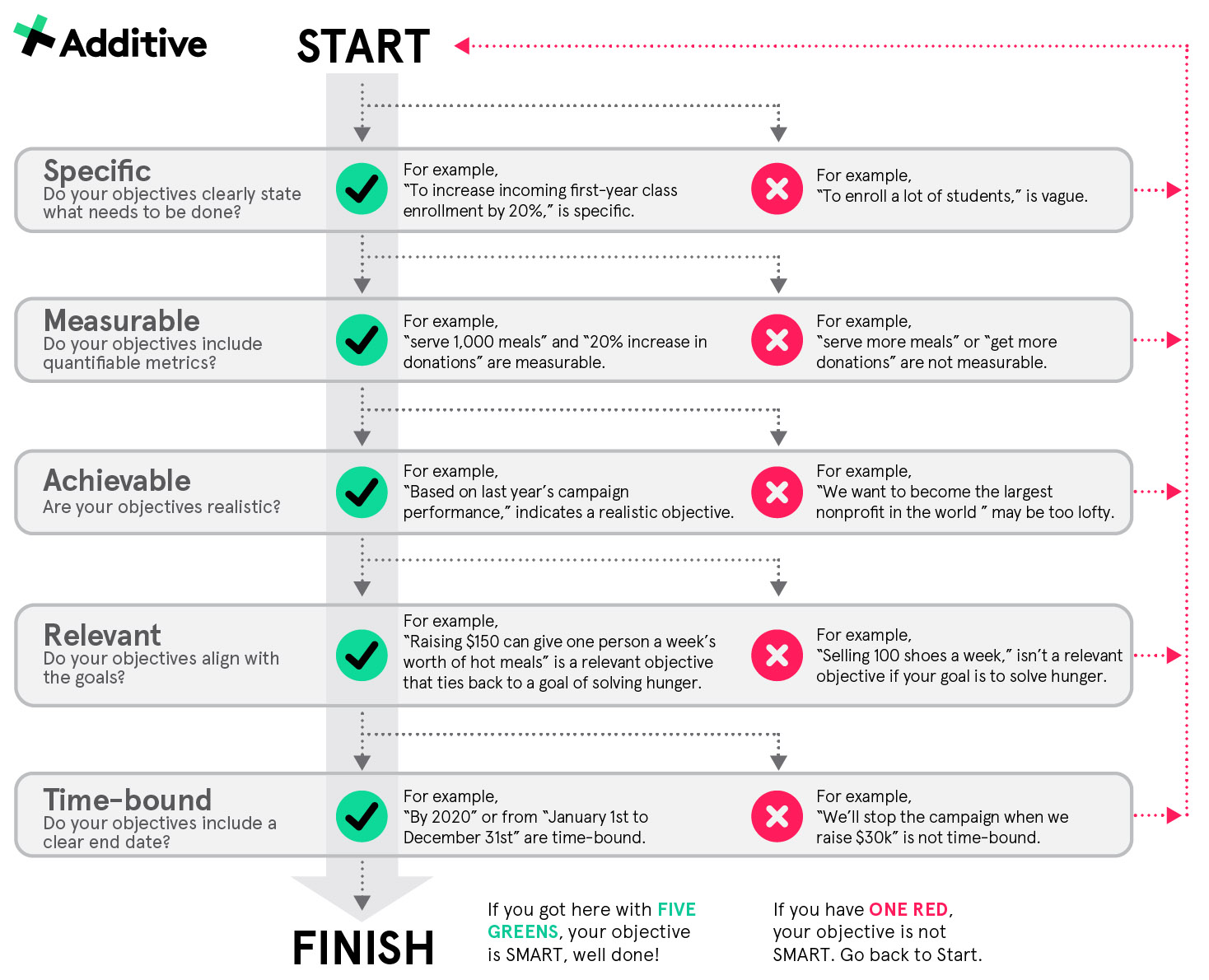
To ensure you hit your goals, your objectives need to be specific, measurable, achievable, relevant and time-bound, or SMART:
2. Identify and Prioritize your Target Audience(s)
Once your goals and objectives are established, the next step is identifying who you want to deliver your message to. As you begin to identify who your audiences might be, it’s important to consider who they are, both in a demographic sense and a behavioral sense. This is where the target audience comes into play.
Here are a few thought starters to help you pinpoint your target audience:
- What groups or individuals do you need to engage to help you reach your goals?
- Who would benefit most from your offerings?
- What actions do you want the audience to take?
- Who do you generally engage in your programs, projects, and initiatives?
- What challenges hold supporters back from contributing?
- What characteristics do your current supporters share?
- What characteristics does an ideal supporter embody?
- How are individuals finding your organization (e.g. social media, events, word of mouth)?
While identifying your target audience(s) may reveal several groups, consider prioritizing three or four audiences.
3. Craft a Compelling Message
Each target audience has distinct motivators and barriers; therefore, a one-size-fits-all approach to messaging often falls short. No matter who you’re writing for, though, keep messaging clear, concise, personalized and jargon-free.
Compelling messages are comprised of four key elements that need to be tailored to each audience:
- Key message: The core takeaway you want to deliver to your audience
- Secondary messages: Supporting messages that enhance the key message
- Proof points: Factual evidence that affirms what you say is true
- Calls to action: Actions you want your audience to take
4. Develop Integrated Strategies and Tactics
Now it’s time to bring the communications plan to life! This is accomplished through integrated strategies and tactics. Strategies are a unique approach for pursuing one or more communications goals, and tactics are the methods you employ to execute against the strategy.
The PESO model is a great framework to reference when building out your communications strategies and tactics:
- P: Paid media
- Promotional efforts that involve paying for placements on third-party channels via social media ads, sponsored posts and native advertising
- E: Earned media
- Buzz generated by the public (e.g. the press or your audience) through methods such as PR and word of mouth
- S: Shared media
- Content on social media channels designed to drive engagement between a brand and its audience
- O: Owned media
- The channels you have complete ownership of such as your website, blog, events, etc.
When developing tactics, it’s important to remember the 80/20 rule, which entails allocating 20% of social media content for direct asks (e.g. donations, event registration, etc.) and dedicating 80% for building community through engaging content.

5. Build a Better Budget
After crafting integrated strategies and tactics, the next critical step is to build a feasible budget. Budgeting gives you visibility into the costs associated with implementing your communications plan. In addition, establishing a budget is essential for containing costs and identifying opportunities for efficiencies. Lastly, budgets are a fundamental resource for assessing your plan’s return on investment.
To build a budget, you’ll need to consider the following:
- Does your organization have an existing budget allocated for communications activities?
- How much will each line item in the tactical portion of your plan cost?
- If applicable, what were the projected vs. actual costs for previous campaign implementations?
Your budget should serve as a guardrail to help keep your plan on time and track, so don’t be afraid to tweak your tactics to ensure budget alignment.
6. Create an Actionable Timeline
The final step in any plan development is mapping activities against a timeline. Timelines are essential for helping you stay the course when transitioning from the planning phase to implementation. Create a monthly or quarterly timeline, taking into consideration major events and holidays you want to leverage (e.g. fundraising campaign launch, company anniversary, Giving Tuesday, New Year’s Day, etc.).
Developing a smart communications plan before launching a campaign, program or service is integral to setting expectations and ensuring success. With these six steps, you’re all set to get started on planning. Don’t forget to make the plan your own by tailoring the steps to best achieve your goals!